
New data from Denver South’s 2026 Commuter Survey shows our region’s workforce has largely settled into a new hybrid reality that looks much more in-person than it did just a few years ago. While flexibility remains important, the traditional workweek is making a noticeable comeback across the corridor.
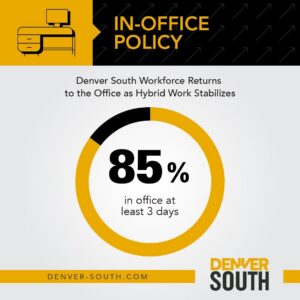
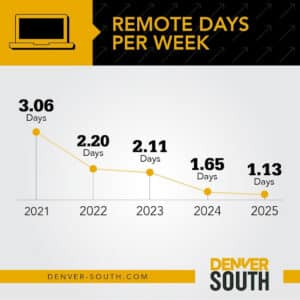
The data shows that 85% of respondents are required to be in the office at least three days per week, with many employers establishing consistent in-office schedules rather than fully remote environments. Employees averaged 3.06 remote days per week in 2021. By 2025, that number had fallen to just 1.13 days per week.
The findings point to a workplace environment that is no longer in flux. Instead, companies across Denver South are settling into stable hybrid models that prioritize in-person connection.
Flexibility Still Matters
As companies continue bringing employees back into the office, flexibility is an important part of attracting and retaining talent across the Denver South corridor.
Nearly 90% of survey respondents said flexible schedules are valuable or very valuable, and 87.5% said the same about hybrid work options. The results show that returning to the office doesn’t mean employees want to give up the workplace adaptability they’ve grown used to.
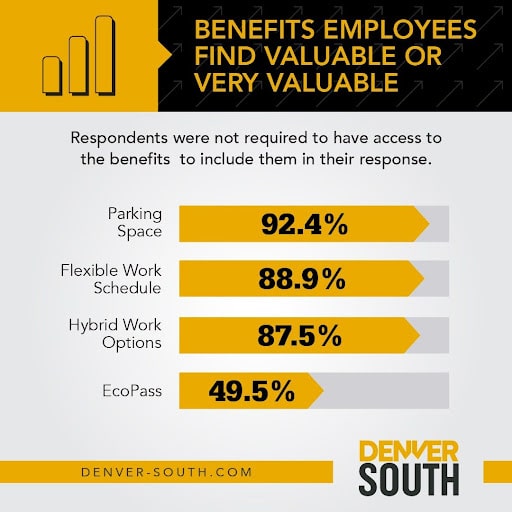
For employers, the takeaway is clear: workers still value choice in how they navigate the workday. That can mean hybrid schedules, flexible start and end times that help avoid peak commute congestion, or workplace benefits that make commuting easier. Nearly 50% of respondents also said an EcoPass benefit would be valuable or very valuable, showing that transportation benefits play an important role in employee satisfaction and commuting choices.
The Ripple Effect of Returning Workers
The return of office workers also brings broader economic benefits to the region. For example, in Lone Tree, areas surrounding Park Meadows Drive and the Lincoln Station corridor stand to benefit from increased daytime activity as more employees return to nearby offices. Restaurants, coffee shops, retail centers, and service businesses throughout the area rely on weekday foot traffic generated by commuters and office workers. Increased in-office attendance supports the local business ecosystem and contributes to the continued vitality of the Denver South corridor.
As hybrid work stabilizes, the Denver South region is entering a new phase with companies creating workplaces and benefits that support flexibility, collaboration, and long-term economic growth. The energy returning to offices, transit systems, and local businesses across the corridor signals an exciting new chapter for our region’s continued growth and momentum.
See the full 2026 Commuter Survey results here!
Note: Survey data was collected throughout 2025 and published in 2026.