
Quick Answer: Economic development improves a region’s economic prosperity and quality of life through job creation, business growth, infrastructure investment, and talent development. Unlike economic growth (which simply measures GDP increases), economic development focuses on sustainable improvements in employment, income levels, and community wellbeing.
Economic Development at a Glance:
- Focus: Quality of life improvements (jobs, wages, equity)
- Timeframe: Long-term sustainability (vs. short-term GDP growth)
- Key Players: Government, businesses, land developers, education, economic development organizations
- Success Metrics: Job quality, wage growth, community resilience
- Example: Denver South region – 220,000 employees, 19,000 businesses, 64% bachelor’s degree or higher
Economic Development Definition: Beyond GDP Growth
Economic development is a multifaceted approach focused on improving economic well-being and quality of life for a region’s residents. It involves strategic initiatives that go beyond simple business growth.
Key components of economic development include:
- Creating jobs and training talent
- Developing and improving infrastructure
- Education and skills development programs
- Building sustainable and inclusive communities
- Fostering regional competitiveness
- Creating resilient local economies
Denver South implements these principles through comprehensive programs and services designed to support businesses at every stage.
Why Economic Development Matters for Your Business
If you’re evaluating locations for expansion or relocation, understanding how economic development works helps explain why some regions offer stronger foundations for business success than others.
Strong economic development creates tangible operational advantages. Organizations like Denver South invest in talent training programs and education partnerships that create talent pipelines aligned with industry needs, reducing the time and cost companies spend recruiting from outside the region.
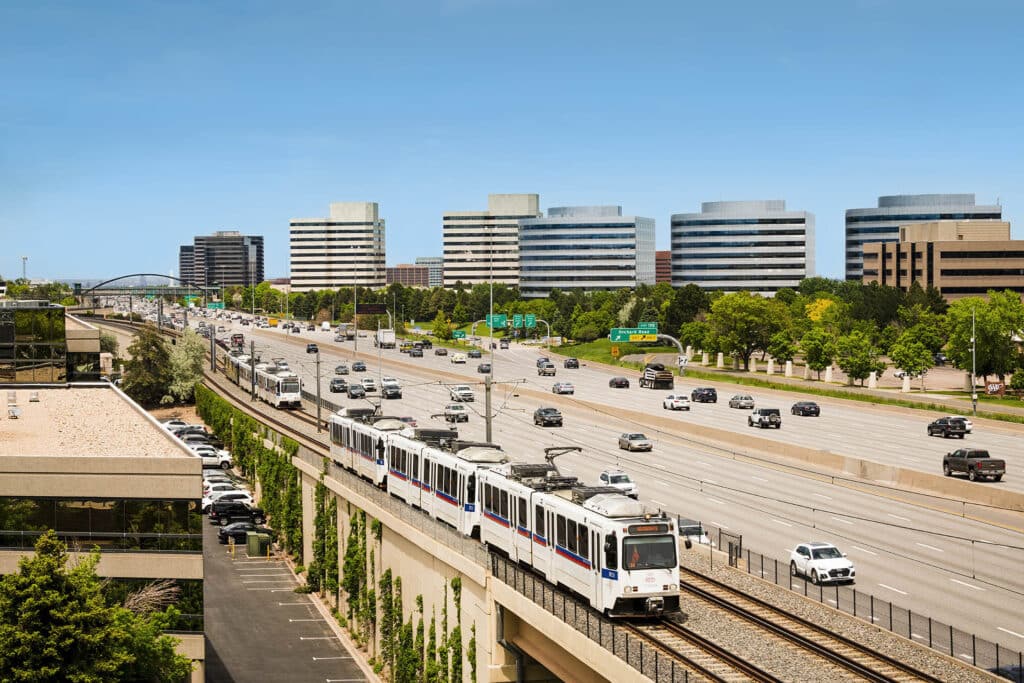
Strategic infrastructure investments in transportation, broadband, and utilities lower operating expenses while improving connectivity. Denver South’s location along the I-25 corridor provides direct access to major transportation networks and to Denver International Airport and Centennial Airport, the busiest general aviation airport in the world with full customs services and 24/7 operations. Through our Transportation Management Association (TMA), Denver South also invests directly in physical infrastructure improvements like road enhancements, interchange upgrades, and bike and pedestrian trails. These investments improve employee commutes and site accessibility while creating logistical advantages that reduce costs and expand market reach.
Economic development organizations also help navigate permitting, site selection, and regulatory requirements. This removes friction that can slow expansion projects. They facilitate connections with local jurisdictions, utilities, and service providers, acting as a single point of contact for complex multi-stakeholder processes. Denver South also connects companies new to the U.S. or region with trusted financial, legal, banking, visa, and accounting professionals, streamlining the setup process.
Regions with strong economic development also attract complementary businesses, creating industry clusters where companies benefit from shared suppliers, specialized talent pools, and collaborative innovation. Denver South focuses on six core industry clusters: aviation and aerospace, broadband and digital communication, engineering services, financial services, IT-software and electronics, and life sciences. These ecosystem advantages are especially pronounced in these sectors.
What’s the Difference Between Economic Development and Economic Growth?
In everyday conversations, the terms “growth” and “development” are often used interchangeably, which can be confusing when discussing economic concepts. Despite their close association, these terms represent distinct approaches to regional prosperity.
| Category | Economic Growth | Economic Growth |
| Focus | Quality of life | GDP increase |
| Timeframe | Long-term sustainability | Short-term gains |
| Metrics | Jobs, wages, equity | Output, production |
| Approach | Multi-stakeholder collaboration | Single-metric tracking |
| Includes | Infrastructure, education, quality of life | Purely economic measures |
| Example | Talent training programs | Quarterly GDP reports |
Economic growth is about bigger numbers: more jobs, more businesses, more people, and higher incomes and profits. It’s measured by GDP and tracks economic output in the short term.
Economic development takes a multi-pronged approach to building a long-term, sustainable future for a region, focusing on both economic growth and a high quality of life for its residents. It’s much broader in scope and includes elements that you might not normally associate with economics, such as transportation infrastructure, zoning, permitting, education, and talent development, and long-term community resilience.
Think of it this way: economic growth answers “how much?” while economic development answers “how well?” Growth tracks the numbers (GDP, employment figures, business counts). Development assesses the quality (livability, sustainability, equity, and long-term prosperity for all residents).
How Economic Development Works
The goal of economic development is to improve the well-being of everyone in a community, regardless of race, background, or class. But how does it actually work at the local level?
Economic development succeeds when addressed at local and regional levels rather than nationally. As Harvard Business School professor Michael Porter notes in his research on competitive advantage: “While macro policies and regulatory reforms set important conditions for growth and access to opportunity, it is ultimately the role of local and regional actors and institutions to address the unique market failures and opportunities in their community.”
This local focus is supported by extensive research from the International Economic Development Council (IEDC), which emphasizes that effective economic development strategies must be tailored to regional assets, industry clusters, and talent capabilities rather than relying on one-size-fits-all approaches.
Economic development organizations like Denver South succeed by understanding the unique circumstances of their metropolitan areas. Regional strategies work because:
- Every metropolitan area, like Denver and the surrounding counties, has unique circumstances and opportunities
- Local economic development organizations understand market-specific challenges that national policies can’t address
- Regional approaches can respond quickly to business needs and market conditions
- Community-level partnerships among government, education, and business drive targeted solutions
This localized approach allows Denver South to create programs tailored to our six core industries and their supporting suppliers and manufacturers, rather than applying generic strategies that might work elsewhere but not here.
The Cycle of Success: How Strong Wages Drive Regional Prosperity
Economic development organizations understand that sustainable growth comes from a virtuous cycle. A virtuous cycle is a self-reinforcing pattern where positive outcomes trigger more positive outcomes, creating continuous prosperity:
The upward momentum:
- Strong wages give residents more spending power
- Increased spending boosts consumer demand
- Higher demand drives business expansion and hiring
- More jobs decrease unemployment rates
- The cycle reinforces itself, creating sustained economic growth
The Virtuous Cycle in Action: Denver South’s highly educated talent pool — with 64% holding bachelor’s degrees or higher — commands competitive wages that fuel regional prosperity and consumer spending.
Source: Denver South Economic Development Partnership, 2025
When wages drive the economy (as opposed to external factors like short-term tax incentives), regions foster more sustainable and inclusive success. This creates a thriving, resilient economy built on sustainable wage growth and consumer confidence.
How Denver South Drives Business Success
Denver South takes a strategic approach to economic development that directly benefits the businesses operating in our region. Rather than generic programs, we focus on addressing the specific challenges and opportunities facing companies in our core industry sectors.
Our partnerships with educational institutions like Community College of Aurora, University of Colorado Denver, University of Denver, Metropolitan State University, and Colorado School of Mines ensure that training programs align with actual employer needs. When companies need specialized talent for aerospace manufacturing or software development, these partnerships help build talent pipelines locally rather than forcing businesses to recruit nationally.
We provide active transportation programs that help employees commute more efficiently, including access to RTD’s 9 light rail stations throughout the region, Lone Tree’s Link on Demand rideshare service, and the SPIN ebike and scooter program. Reduced commute stress translates to better retention and productivity, operational benefits that directly impact your bottom line.
From site selection assistance to permitting navigation to connections with key stakeholders, we remove friction from expansion projects. Our relationships with local jurisdictions help businesses move faster through complex approval processes. Our Data Center provides the market intelligence you need for informed expansion, hiring, and investment decisions. Understanding regional wage trends, talent availability, and industry growth patterns gives you a competitive advantage.
Denver South: A Case Study in Economic Growth
Denver South By the Numbers (2025):
- Employment: 220,000 employees across 19,000 businesses
- Education: 64% of residents hold a bachelor’s degree or higher
- Infrastructure: 473 million sq ft of office space, 214 million sq ft of flex space
- Connectivity: 9 RTD light rail stations, direct access to I-25 & C470, proximity to Denver International Airport
Source: Denver South Economic Development Partnership, 2025
Businesses in our region are thriving, contributing significantly to Colorado’s economic landscape:
- Arrow Electronics (Centennial): Full-year 2024 revenue of $27.9 billion, with strong performance across global components and enterprise computing solutions
- Liberty Media (Englewood): Total revenue of $3.65 billion in 2024, a 13.4% increase, demonstrating growth in Colorado’s media and entertainment sector
- Colorado Restaurant Association: Represents an industry that drives $28+ billion in annual sales across Colorado
When companies like Arrow Electronics and Liberty Media succeed, their employees earn strong wages that ripple throughout the regional economy. Those well-compensated workers become customers at local restaurants, entertainment venues, retail shops, and service businesses. The Colorado Restaurant Association’s $28+ billion in annual sales is generated by tourists but also fueled by residents with disposable income earned from thriving local employers. This is the virtuous cycle in action: business success drives higher wages, higher wages increase consumer spending, and that spending creates opportunities for businesses across all sectors to grow and hire. The result is a stronger, more resilient local economy where success in one industry lifts the entire region.
Collaboration: The Foundation of Economic Development
Economic development succeeds through strategic partnerships and collaborative initiatives that benefit entire communities, not just isolated sectors. The fundamental principle is clear: foster inclusive growth that benefits all segments of society through collective progress over isolated gains.
When communities prioritize strategies that enrich entire populations, they build sustainable, resilient economies that embody the true spirit of economic development.
Success requires collaboration among diverse economic stakeholders, from government and education to healthcare and the public. Together, these groups ensure programs and services align with community needs and drive inclusive growth.
Denver South offers the ecosystem, resources, and partnerships to support your business growth in a thriving regional economy. Learn more about Denver South’s business community and why companies choose to locate here. Connect with our team today to discuss how Denver South can support your company’s expansion goals.
To learn more about our programs & services please contact one of our team members today:
Entrepreneurial Support:
[email protected]
Existing Businesses:
Becky Nelson
[email protected]
Prospective Businesses:
Christine Shapard
[email protected]