
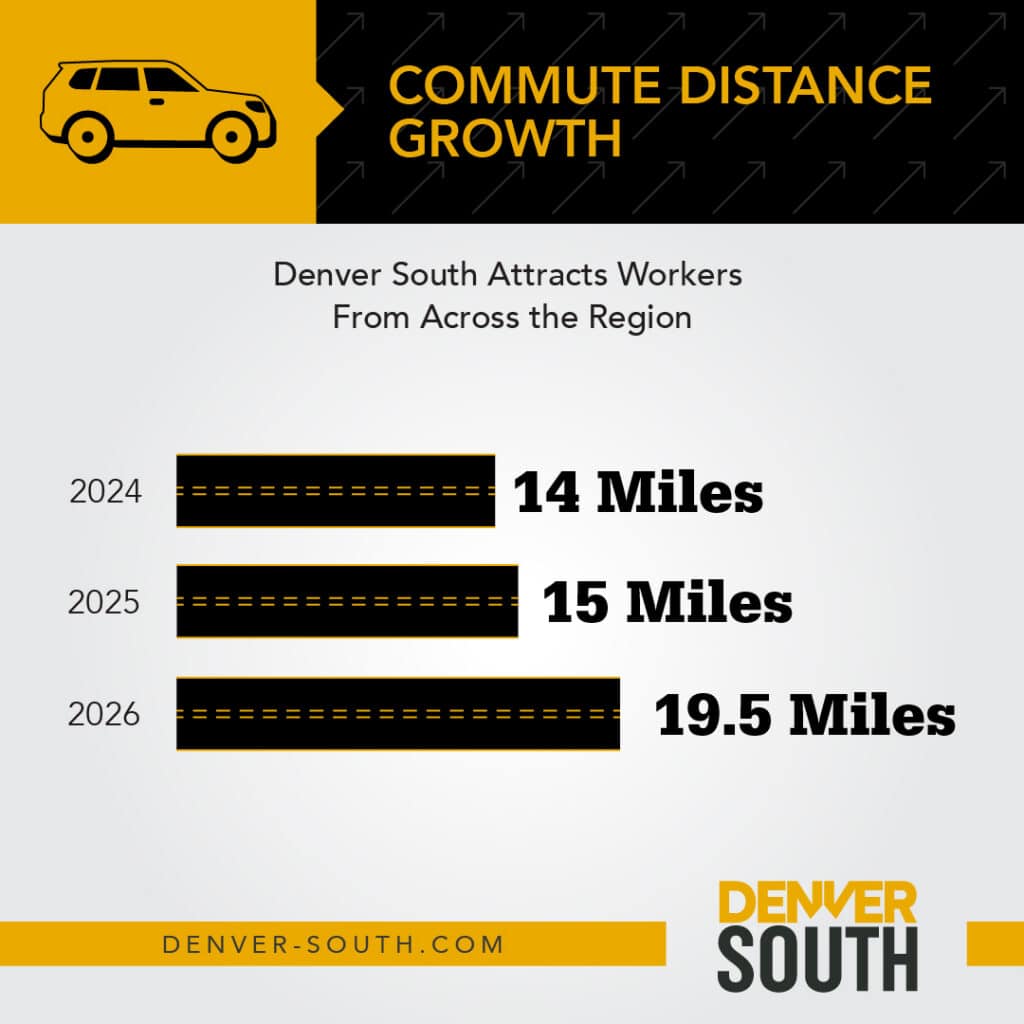
As Denver South continues to add jobs and attract major employers, workers are increasingly traveling from across the metro area to access opportunities in the region, according to new data from Denver South’s 2026 Commuter Survey.
The average one-way commute rose to 19.5 miles, up from 14 miles two years ago, indicating that workers are traveling from a wider geography to access opportunities throughout the corridor.
A Workforce That Spans the Metro Area
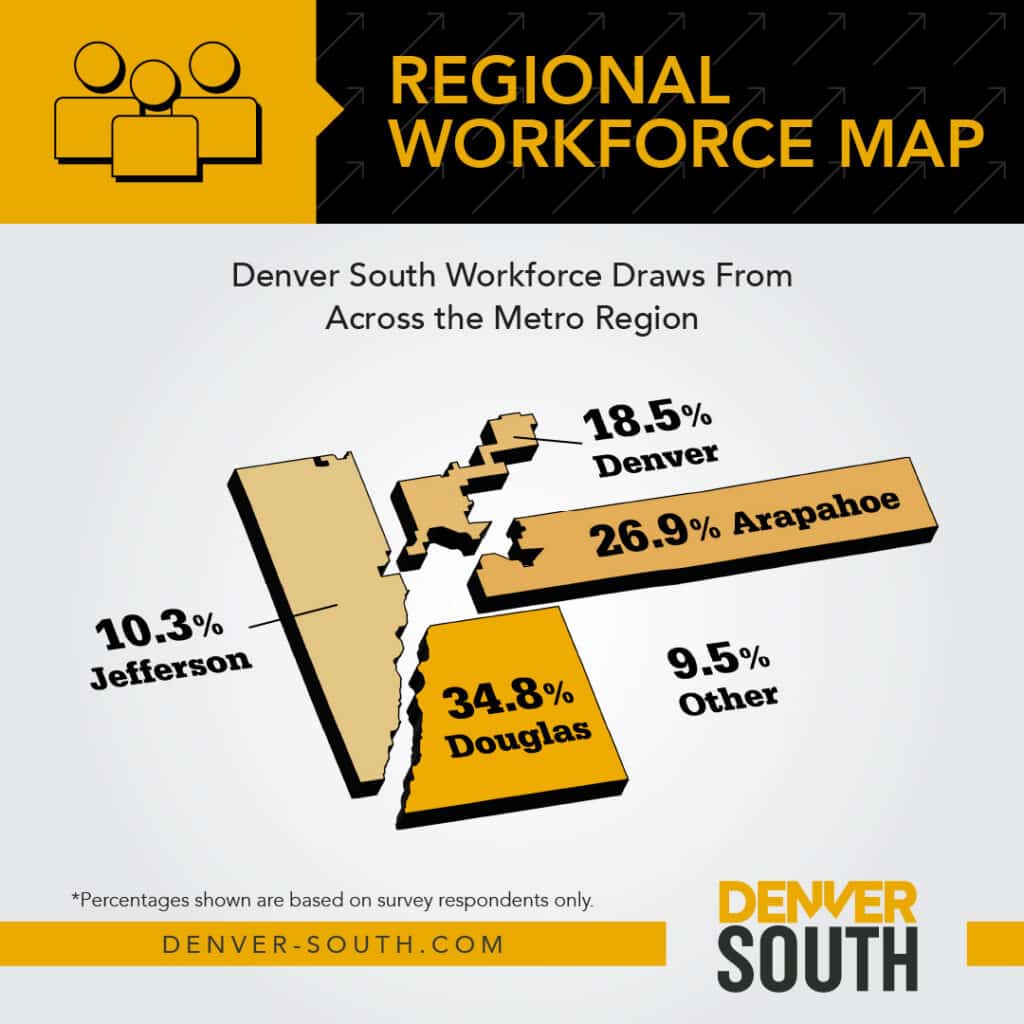
Respondents reported living in Douglas County (34.8%), Arapahoe County (26.9%), Denver County (18.5%), Jefferson County (10.3%), and other areas across the metro region.
The increase in commute distance is ultimately a reflection of Denver South’s growing economic influence. As businesses continue to expand and invest in the region, the corridor is attracting talent from a broader geographic area and is one of Colorado’s most important employment hubs.
In fact, while the region is home to just 5% of the state’s population, it supports 8.3% of Colorado’s jobs and contributes 11.3% of the state’s gross regional product.
Why Denver South Continues to Grow
Denver South has long been one of Colorado’s leading business centers, evolving from the legacy of the Denver Tech Center into a broad employment and economic engine.
Today, Denver South is home to more than 250,000 workers and some of the nation’s most recognized employers, including companies in aerospace, healthcare, finance, telecommunications, engineering, and technology. Major employers such as Charles Schwab, Fidelity Investments, Western Union, Comcast, Arrow Electronics, Empower, United Launch Alliance, and Charter Communications (Spectrum) help drive economic activity and create opportunities that attract workers from throughout the metro area.
Denver South is also home to approximately 48 million square feet of office space, making it one of the largest concentrations of commercial office space in Colorado.
For employers, community leaders, and economic development partners, the survey data provides an indicator of Denver South’s continued momentum and importance to the broader regional economy.
See the full 2026 Commuter Survey results here!
Note: Survey data was collected throughout 2025 and published in 2026.